Building Relationships Through Telemarketing
When you think of telemarketing, your mind probably jumps to cold calls and sales scripts. However, the fact of the matter is that, in the realm of B2B marketing, telemarketing has evolved into something much more valuable: relationship development.
People are what B2B marketing is ultimately about. You’re not simply hawking a product or service; you’re reaching out to another human being at the other end of the phone. And that relationship, when done well, can be the foundation for long-term collaborations, trust, and real business growth.
Why relationship building is crucial to B2B marketing
In B2B, decisions take time. You have to juggle various stakeholders, squeezed budgets and extended sales cycles. Which means a one-off sales pitch just won’t suffice. What companies are looking for is to work with people they can trust, partners who understand their problems and genuinely want to help fix them.
This is where the power of B2B telemarketing truly shines. A phone call is personal. It opens up opportunities to have honest conversations, learn what’s important to your prospects, and establish rapport that extends beyond one campaign.
More than just a quick conversion, relationship-driven telemarketing helps you:
- Create warm leads, not just cold lists
- Stay top of mind until the time is right
- Understand pain points that aren’t always obvious online
- Build a human connection in an increasingly digital world
Let’s explore how that works in practice.
It opens the door to meaningful conversations
Most inboxes are overflowing. LinkedIn is busy. Social media is noisy. But when the phone rings and there’s a friendly, professional voice on the other end that’s not in a hurry to pitch something, people tend to light up.
Unlike other telemarketing, good telemarketing doesn´t even start with a sales script; it begins by listening. Proper questioning and listening create space for a genuine conversation. That’s when you start forming relationships.
For example, instead of saying, “We provide IT support services,” a relationship-first approach would sound something like: “I’m calling today because we work with companies just like yours, that have been grappling with hybrid working challenges. Does any of that relate to your team?” That little shift makes all the difference in the world. You’re not selling anymore, you’re engaging.
It builds trust over time
Relationships don’t develop in a weekend. And that’s okay. B2B telemarketing is often about follow-up.
Just because someone might not be ready to buy today doesn’t mean the conversation isn’t worth having. Creating familiarity by keeping dialogue open, checking in, sharing valuable resources, and remembering what they said last time generates comfort. And trust is a byproduct of familiarity.
That’s particularly crucial when what you have to offer is complex or valuable. People are curious to know that you know how to apply your knowledge and that you genuinely care. Showing that you’re in it for the long term, not just the quick kill, can be communicated with a well-timed phone call.
It gives you insight that digital channels can’t
Often, the most valuable piece of knowledge is something mentioned in passing, such as a change to a company’s organisation, the beginning of a new budget cycle, or a pain point the person hasn’t shared publicly online.
These snippets of context can change everything about how (or when) you reach out to your prospect. And you only get that kind of detail from talking with someone. It allows you to customise your follow-ups, adjust your messaging, and ultimately provide something more relevant.
In an age of personalisation, where personalisation matters more than ever, this kind of insight is worth its weight in gold.
It humanises your brand
There’s nothing more that captures people’s appreciation than when a customer service person is helpful, professional and, far rarest of all, kind. Suddenly, your business is more than just another name in the market. It’s a team of real people who genuinely care about getting to know you and helping.
That emotional link may not be quantifiable on a balance sheet, but it can certainly tip the scales when a prospect is deciding between you and another competitive offer.
Put simply, relationship-led telemarketing brings life to your brand.
Why you should choose Novus for B2B telemarketing
Not all telemarketing is equal. At Novus, we’re committed to doing things differently, and it all begins with you.
We’re here to do more than just dial numbers and read from a script. We are thoughtful and strategic, focusing on quality conversations that bring long-term value.
Here is why businesses trust us to act as their brand ambassadors:
We focus on real conversations, not just quick wins
At Novus, we recognise that relationships are not always built overnight. Therefore, we measure success not by the number of people we call in a day, but by the quality of connections we make.
The people on our team are taught to listen more than they talk, to ask interesting questions, and to discover the common ground that creates an affinity. Whether it’s on our first point of contact or a follow-up six months down the line, we are committed to leaving a positive, lasting impression.
We represent your brand like it’s our own
We understand the level of trust it takes to entrust your brand to another, which is why we take that responsibility seriously. Everything we say represents your values, your unique voice, and your ultimate objective.
From studying your product to understanding your audience’s pains, we believe that each marketing campaign should be an extension of your own team.
We keep things human and honest
There is no hard sell here. We believe that honest and respectful dialogue yields great results. We dislike something; we will tell you. And if we learn something valuable along the way, even if we don’t end up selling, we’ll share it.
We’re all about trust throughout the process: with you and us, and between you and your prospects.

Final thought?
The purpose of B2B telemarketing isn’t just to lift the phone and give a pushy sales pitch. It’s about people, relationships and the caring communication that creates real momentum. With the right strategy and the right team behind you, it can be one of the most effective ways to engage your audience.
If you’re ready to build stronger relationships and grow your pipeline with confidence, contact Novus. We’d love to hear from you.
11 Key Advantages Of Telemarketing
Telemarketing is still one of the most powerful tools for businesses to reach potential customers, establish rapport, and close deals. Even though digital marketing strategies are on the rise, telemarketing still provides unique advantages that allow companies to target their audience directly, engage customers, and improve conversion rates. From the initial cold call to follow-ups and lead generation, telemarketing is a flexible solution for companies ranging in size.
Here, we will focus on the 11 main advantages of telemarketing and how it can be utilised for better business success. Also, learn why Novus is the number one choice among expert telemarketing service providers.
1. Direct contact with prospects
Telemarketing provides businesses with the opportunity to communicate directly with prospective customers, so they can have meaningful conversations. While digital marketing strategies depend on third-parties, telemarketing connects directly with prospects facilitating a more personalised and effective sales pitch.
The ability to directly engage with customers enables businesses to meet their needs, resolve inquiries, and propose tailored solutions, resulting in a higher conversion rate. It also allows the business to connect with those who may be inactive online or respond poorly to digital advertising.
2. Personalised communication
This is considered one of the biggest advantages of telemarketing, as it allows personalised communication with every prospect. Unlike traditional forms of advertising, with telemarketing, businesses can adapt their pitch according to the needs, preferences, and responses of the individual during a conversation.
It helps build a closer bond between the business and its customers, as they feel they are being catered to and understood. This is critical for ensuring the message resonates with the consumer and addresses their pain points.
3. Lead generation and qualification
Telemarketing is one of the most effective ways to generate and qualify leads. Sales teams can directly contact prospective clients, gather pertinent information, and determine if they match the ideal customer profile.
Phone conversations allow businesses to gauge interest and readiness to buy. The businesses will then use this real-time interaction to discover qualified leads, allowing time and effort to be focused on prospects who promise to become repeat customers.
4. Cost-effective marketing strategy
Telemarketing is less expensive than conventional marketing methods like television or print ads. This is not an easy task, and it does require a talented team and technology, but it often has a much lower initial investment and offers a better ROI.
The advertisements also have demographic targeting options so businesses can scale back. Furthermore, telemarketing can enable business scalability with little upfront costs by using outsourced third-party telemarketing services or using automated systems to do the dialling and follow-up with leads.
5. Immediate feedback and insights
Immediate feedback is one of the greatest advantages of telemarketing, which can ensure your sales team on whether or not they are truly making it. On a call, businesses can feel the interest level in the person they’re talking to and understand their needs, concerns, and buying intent.
This real-time feedback lets businesses adapt their approach and their messaging, increasing the likelihood of closing a sale. Moreover, the feedback can be leveraged to make improvements in the marketing strategy and optimise the process of selling.
6. Improved customer relationships
Telemarketing presents an opportunity to develop and maintain long-term customer relationships. To create a noble image of themselves to prospects and customers, businesses directly interact with them and build trust and rapport. Because of this personal connection, credibility is built for your product or service, which creates a preference for your product or services over your competitors.
Telemarketing provides a way for agents to make follow-up calls, understand what the person is saying, and also provide tailored solutions to strengthen the relationship and make the customer evolve further.

7. Flexibility and scalability
It is a highly scalable and flexible option for all companies. Marketing campaigns, such as new product launches, seasonal promotions, or customer retention efforts, can easily be tailored to fit the business needs.
Moreover, telemarketing campaigns can be scaled according to business requirements. Companies can easily scale up by adding more agents or upping the volume of calls as demand increases without making substantial changes to their operations. Telemarketing can be tuned to the changing needs of the business, making it a versatile solution.
8. Boosts brand awareness
Telemarketing builds brand awareness, directly reaches potential customers, and introduces them to your product or service. Even if a prospect doesn’t end up making a purchase, the interaction is itself an opportunity for them to get familiar with your brand.
Telemarketers can inform prospects about your offerings, deliver differentiators, and portray your brand as a trusted and knowledgeable source. Such calls can create curiosity, generate interest in the brand, and lead prospects to look for more information about it.
9. High conversion rates
Telemarketing conversion rates are among the highest of any marketing channel, especially when compared with digital ads or email marketing. This is because telemarketing is a human connection; it builds trust and engages the prospect in a conversation.
In contrast to passive techniques, wherein the prospect can simply ignore the advertisement or email produced, telemarketing allows real-time addressing of pain points, responding to queries, and closing the deal. Upselling and personalised service, which walks the prospect through the decision-making process, provide a greater chance of converting leads into customers.
10. Data collection and market research
Telemarketing is an indispensable tool for collecting data and conducting market research. Telemarketing calls can help survey prospects and customers, allowing businesses to gain a better understanding of their needs and identify trends.
Such data is crucial in enhancing marketing strategies, product development, and business decision-making. By analysing data collected from telemarketers during their interactions, future telemarketing campaigns can be adjusted to avoid poor results, leading to a business that is more in tune with the market and the expectation of the consumer.
11. Enhanced custom retention
While telemarketing aids in the acquisition of new customers, it significantly adds to customer retention as well. Regular contacts with existing customers help in maintaining good relations and ensuring customer satisfaction.
Telemarketers can provide personalised recommendations or promotions, promoting yet another buy and long-lasting satisfaction. Encouraging customers to check in with you before issues arise creates a foundation of trust and ensures customers feel valued and heard – leading to better retention rates.
Choose Novus for specialist telemarketing services
With Novus, you get professional, result-driven services customised to your business aspirations. We offer tailored relationships between professional business people and consumers using state-of-the-art telemarketing to help business sales increase.
At Novus, we utilise proven strategies and state-of-the-art technology for great results regardless of whether your goal is building brand awareness, qualifying potential leads, or retaining customers over time. So trust Novus to elevate your telemarketing strategy and help your business succeed.
Lead Generation vs Demand Generation: The Key Differences
In this competitive market, it is absolutely essential for businesses to know the distinction between lead generation and demand generation so they can build effective marketing strategies. Both are critical drivers of growth, but they have different functions. Lead generation is the practice of getting leads, which involves getting information from companies that can become potential customers. Demand generation focuses on creating awareness and inducing an interest in a product or service, resulting in conversions down the road.
Understanding these differences will help businesses choose their preferred method of working based on their needs and goals. This article will look at the main differences between lead generation vs demand generation, and explain how to determine which strategy is best for you.
What is lead generation?
Lead generation refers to the process of generating and capturing potential customer data, such as names, email IDs, or phone numbers, in order to capitalise on a sale. This usually means using tactics to get your prospects to show interest in a product or service so they will provide you with something of value, such as a free trial offer, white paper, eBook, etc.
Businesses cannot succeed unless they have a consistent stream of qualified leads through a process known as lead generation. This process utilises targeted marketing campaigns, including digital avenues, such as social media and SEO, and direct contact methods like phone calls and email blasts, to generate leads along the various stages of the buying process.
It aims to create leads that will be nurtured over time and engaged with through personalised follow-up messages until they are purchase-ready. This allows businesses to allocate resources to indicated interest leads, thereby optimising resource allocation and increasing conversion rates.
What is demand generation?
Demand generation is a marketing technique that aims to create interest and awareness in a company’s products or services, resulting in demand. It is more about brand awareness and educating possible leads than capturing contact information.
Demand generation can entail anything from content marketing to webinars, social media outreach, and public relations—all in an attempt to promote the company as a thought leader within its industry and pique interest in what it has to offer.
Demand generation takes a broader approach by targeting a wider audience, often before potential customers even know they have a problem or need. The aim here is to nurture these interests over a period of time, by taking the prospects through the awareness and consideration stages in the buyer journey.
Demand generation helps to accrue trust and educate the market for future lead generation so that when your customers are ready to make buying decisions — you’re what they think of.

The key differences between lead generation and demand generation
There are some main ways you can differentiate lead generation and demand generation:
Focus and objective
Lead generation is more about the “how” — how a business captures, tracks and manages prospective customers’ email addresses. It concentrates more on turning interested prospects into actionable leads by promoting quick engagement.
Demand generation is more strategic, aiming to make a brand or product visible and create interest. There is not always a quantifiable, direct lead from demand generation — but over time, it creates the desire for sales leads to convert into paying customers.
Audience approach
Lead generation is typically aimed at prospects who have already shown some level of interest in the product or service. These prospects are often further down the sales funnel and more likely to convert. Demand generation, on the other hand, casts a wider net, targeting a broader audience that may still need to learn they need your product or service. It is about educating potential customers and nurturing them over time so they recognise the value of your offering.
Metrics and KPIs
Lead generation metrics include the volume of qualified leads captured, conversion rates and cost per lead (CPL). Lead generation campaigns are most commonly measured based on their ability to convert leads into sales opportunities.
On the other hand, demand generation metrics will tell you about your engagement levels, how much traffic has been visited because of these campaigns, and how they have affected customer awareness regarding brand or content consumption.
The end game in most of these funnels is interest, measured by reach and impressions or some measure of audience engagement.
Timeline and strategy
Lead generation often delivers short-term results, driving immediate engagement. Demand generation, on the other hand, is a long-term strategy that aims to build a sustained interest in a brand over time. Both are critical, but businesses must understand when and how to use each to achieve their goals.
Should you prioritise lead generation or demand generation?
The answer to whether lead generation or demand generation is more important varies by business, market position, and targeted audience. Demand generation will likely be more useful if your company is new or entering a highly competitive market. It lets you create your brand, educate prospects on your products or services, and build awareness. For those enterprises, a long-term strategy is necessary to build up a reputation and attract greater audience outreach.
If your brand is already well-known and you want to turn all that interest into actual sales instead, lead generation would be more appropriate. Lead generation is ideal when you need to target prospects further along in the buying process who are ready to engage.
In the end, you need to strike a balance between the two. A business should use demand generation to build awareness while also implementing lead generation tactics to capture and nurture prospects when they are ready to take action.

Key takeaways
Put simply, lead generation and demand generation are both important for business progress. Where demand generation builds awareness and interest in the long run, lead generation works to turn that interest into tangible leads. It might be more beneficial for you to focus on one over the other—but it really just depends on what your business needs and goals are.
Regarding effective lead generation, Novus stands out as a trusted partner. With proven expertise in identifying and nurturing high-quality leads, Novus ensures businesses can focus on closing deals rather than searching for prospects. Our tailored lead-generation strategies drive measurable results, making us the go-to solution for boosting sales opportunities.
What Is Lead Qualification And How Does It Work?
When it comes to telemarketing, lead qualification is a must — if you`re not qualifying your leads (quickly and efficiently), you won’t have a great chance of success. It is the process of evaluating and classifying leads using filters to make sure that a business does not waste its resources on unqualified leads. It helps streamline efforts and likely gives a better chance of converting leads into customers.
A proper understanding of lead qualification types, along with a strong framework, is a perfect generator for telemarketing campaigns. We will cover the basics of lead qualification, why they are important and how to implement lead scoring and qualification checklists in your telemarketing campaign.
What is lead qualification?
Lead qualification consists of assessing leads by their chance of converting them into customers. It includes evaluating several factors, such as the needs of the lead, budget, decision-making authority and timing. When businesses qualify leads, they ensure that sales and marketing efforts are geared toward high-potential prospects.
In turn, this process helps exclude leads that do not match the Ideal Customer Profile (ICP) of the company to ensure better conversion rates and further qualified sales campaigns. For telemarketing, lead qualification is important for maximising resource use and boosting campaign performance.
Why should you qualify your leads?
Many companies wonder why they should bother going through the process of lead qualification, but it actually comes with a wide range of benefits. Here are the main reasons you should qualify your leads:
Increased efficiency
The qualification of leads increases the productivity of your sales process as it allows your team to concentrate on prospects with the most potential. That means you evaluate leads based on the budget, authority, and need for your product/service and then turn them into customers. Filtering less promising leads allows you to avoid wasting too much time and money on leads that are not likely to convert.
With this laser-focused approach, you are able to make the most of your time and resources, hunting down those who will deliver a high return on investment —cleaning up your sales funnel in the process— which leads to better performance overall.
Improved conversion rates
Lead qualification impacts conversion rates directly by ensuring your sales team is only talking to people who are more likely to buy. This involves understanding how well they fit your ideal customer profile and how close they are to purchasing so that you can focus on those with the best chance of closing-market’s ready leads.
It enables your sales team to concentrate on more qualified leads, aiming their efforts topically around what those high-interest leads find most valuable or important. This, in turn, increases the chances of converting prospects to customers, which leads to increased sales and revenue.
Better resource allocation
By qualifying the lead, marketing and sales can focus their efforts on which leads have a higher chance of converting. Qualifying leads helps you to determine which prospects are a good fit for your target customer profile and, therefore, where it is worthwhile to spend your resources.
Also, since this is a targeted approach — not just chasing any and all deals for the sake of having them in your pipeline— effort does not get diluted throughout less promising leads and ensures time and budget are spent economically by your team. When you zero in on the top leads, you are better able to stretch your marketing dollars, and your sales resources will go further, making everything that much more effective and useful.
Enhanced customer relationships
Qualifying leads can give you the inside track on what your customers are looking for, what they are struggling with, and how quickly they are looking to buy. Understanding the unique issues and concerns will allow you to speak their language and offer solutions that are designed to speak directly to those needs.
In addition, a personalised approach to sales makes it more likely that you will bring in conversions while concurrently creating trust and rapport with prospective customers. When you engage well-qualified leads, the interactions that take place are more meaningful and will in turn lead to better customer satisfaction — something that may sound cliché, but remains a critical component of business success.
Reduced sales cycle time
Lead qualification reduces your sales cycle time by making sure that your sales team are spending the majority of their time talking to prospects who you know have expressed interest in your product or service. The sales process becomes more efficient when leads are filtered and their purchase readiness and target profile compatibility are evaluated.
The result is a shorter sales cycle from lead to closed deal. A faster sales cycle time not only saves revenue generation but also increases your team’s productivity—it processes more leads and closes deals more smoothly while increasing sales volumes.

How lead qualification works: Lead qualification frameworks
Lead qualification is an essential process for identifying high-potential prospects and enhancing sales efficiency. Several frameworks help streamline this process, each providing a unique approach to evaluating leads.
BANT (Budget, Authority, Needs, Timeline)
IBM developed the BANT framework, which is an age-old technique to qualify a lead based on 4 of its aspects. The process begins by reviewing their need and then the Budget to learn how they can address that need using the funds available. It then looks at Authority to determine if the lead is in a place to make decisions or if they have to loop others in.
A Needs assessment pinpoints the problem and its status quo, that the lead wants to solve. Lastly, The Timeline is based on how immediate the lead’s needs are and when they plan to make a purchase. While BANT is great for rapid, empirical qualification it cannot stand on its own in most complex situations and must be supplemented by other frameworks.

GPCTBA/C&I (Goals, Plans, Challenges, Timeline, Budget, Authority, Consequences, and Implications)
GPCTBA/C&I is a simple concept developed by HubSpot that considers the modern buyer in its entirety. It starts by discovering the lead´s Goals to understand their purpose. Plans are how they plan to reach these aims and how their actions in the past are related. Challenges confirm the immediacy and willingness to solve problem/s. The Timeline section covers the implementation schedule, while the Budget probes their understanding of ROI and current spending.
Authority checks whether the lead has purchasing power or if it represents someone who does. Finally, Consequences and Implications examine what could happen if the purchase is proceeded with. It is, however, quite good at capturing a lead’s broader context and then aligning solutions around it.
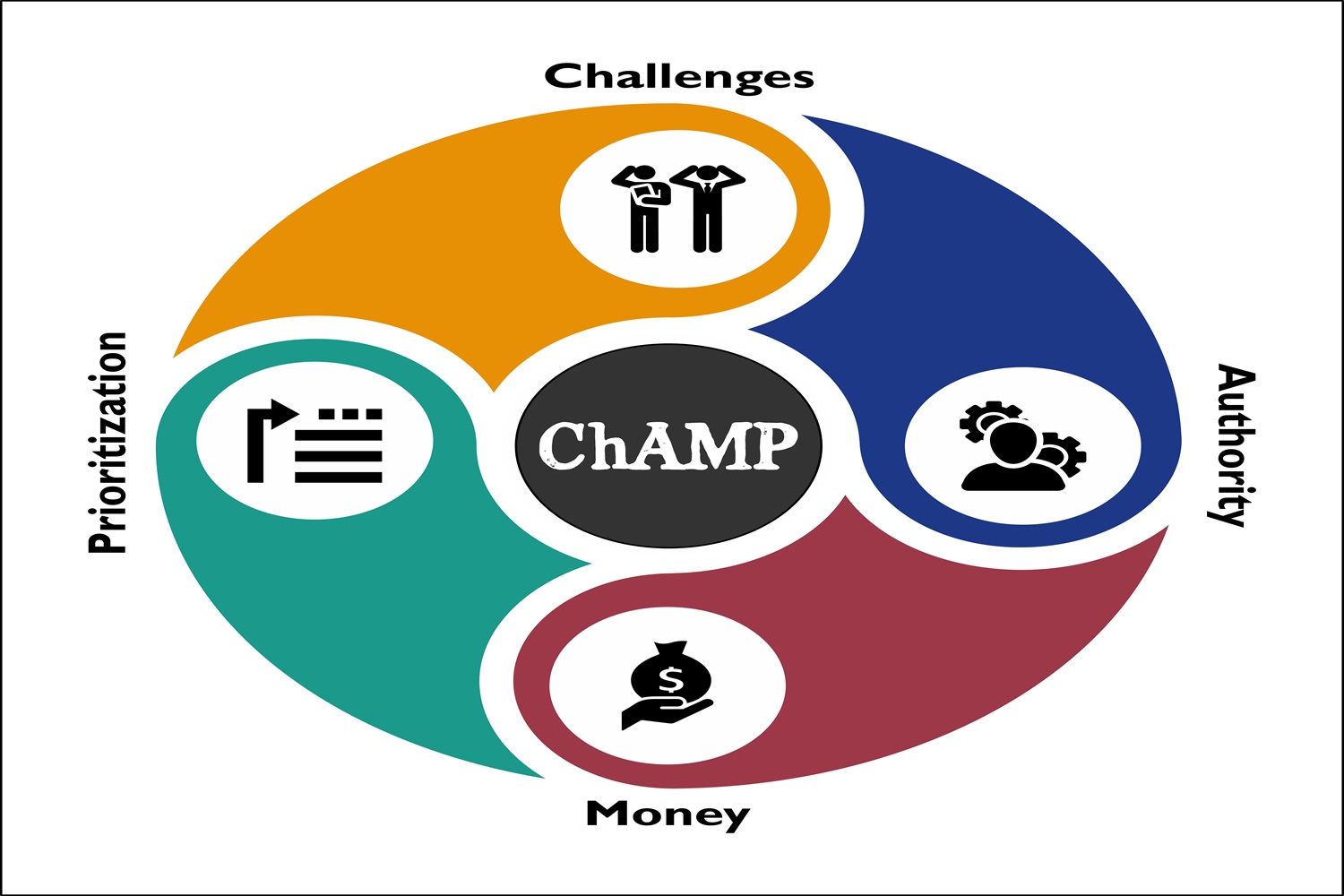
CHAMP (Challenges, Authority, Money, Prioritisation)
In the case of CHAMP, it is created as a reverse approach to BANT where the core focus is to know about any Challenges of the lead first. This means understanding the pain points or fractures in their current state. Authority looks at whether the lead is capable of making a purchase decision or if others must be involved. Money refers to determining if you fit into their budget.
The Prioritisation stage dictates what these users are willing to do (how soon) and even if they have other solutions in mind. For a more consultative sales approach, it is great because CHAMP allows you to identify quickly what immediate issues with the lead are at that moment, clicking with one of those categories to align solutions accordingly.
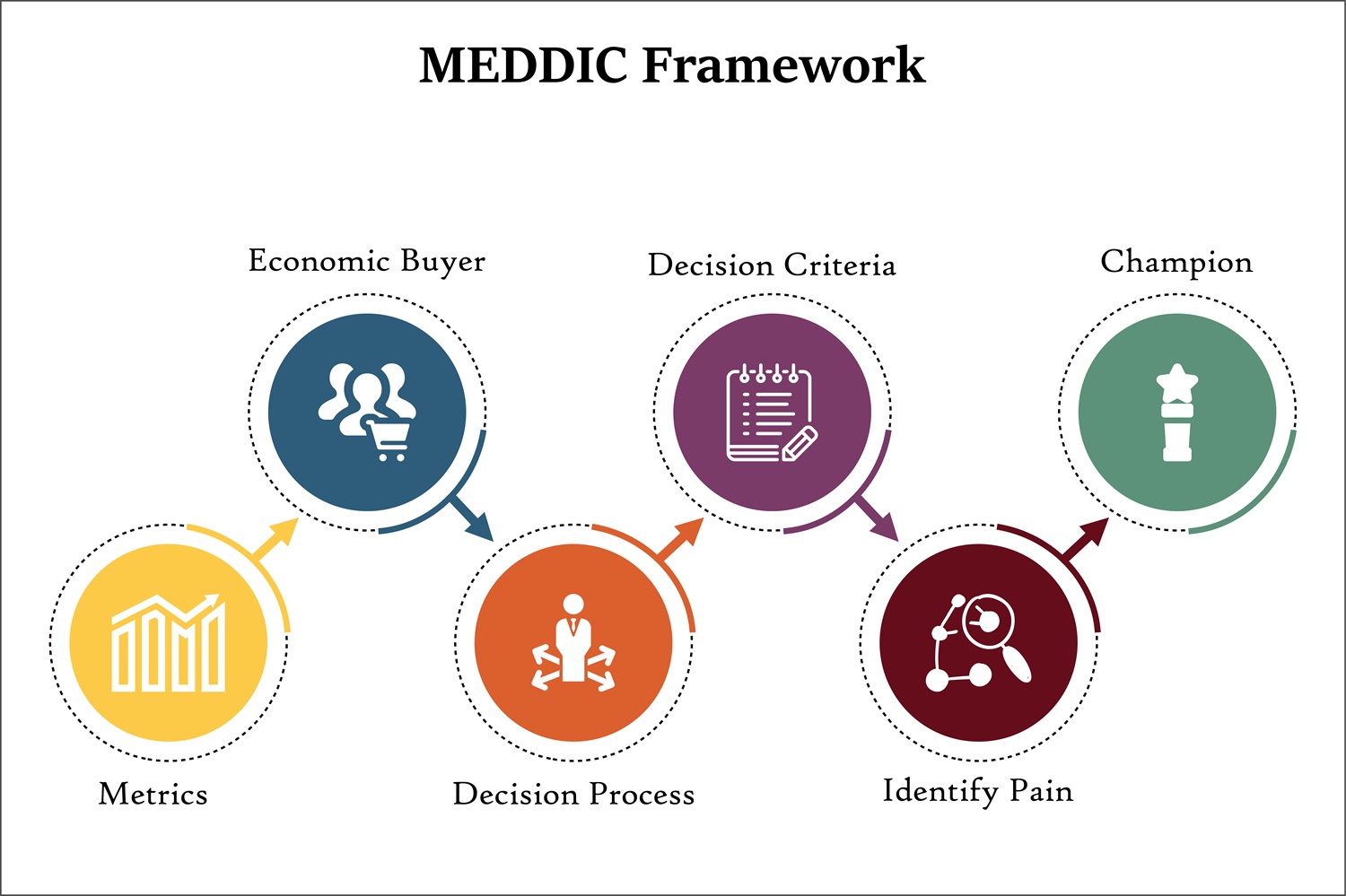
MEDDIC (Metrics, Economic Buyer, Decision Criteria, Decision Process, Identify Pain, Champion)
The MEDDIC framework, created by Jack Napoli, is especially successful for large sales that are common in enterprise settings. It involves understanding the Metrics to gauge the financial impact of the sale for both parties. Economic Buyer identifies who controls the budget and their role in the purchasing decision. Decision Criteria explore the requirements needed to gain approval. Decision Process examines the steps and approvals needed for the purchase.
Identify Pain pinpoints the specific needs your product addresses. Champion finds someone within the prospect’s company who supports your solution and can advocate for it. MEDDIC is valuable for navigating intricate decision-making processes and ensuring a more accurate forecast of enterprise sales.
What is lead scoring, and how does it work?
Lead scoring, as the name suggests, is essentially a process of ranking prospects on a scale — in accordance with their possibility of becoming paying customers. It is a way of quantifying different characteristics and actions of leads (for example, level of engagement, demographics, and their interactions with your brand).
This score’s only purpose is to enable sales and marketing teams to spend their time only on the leads that are most likely to turn into customers. Prospects are filtered in terms of Fit (e.g., job title, company size) and Interest (e.g., email opens, visits to the website). Utilising lead scoring may improve prognosis by helping your business target the best leads faster.
A simple lead qualification checklist
1. Do they want your product?
Check if the lead shows interest in your product. A lack of initial interest means they might not be ready to engage now. Focus on nurturing them with valuable content to build awareness and interest over time.
2. Can they afford it?
Assess if the lead has the budget for your product. If they don’t, prioritise leads who can afford your offering while keeping this lead in your funnel for potential future opportunities.
3. Is it the best time for them to make a purchase?
Determine if the timing of their purchase aligns with their current needs. Even if a lead is interested and has the budget, if the timing is off, adjust your approach to stay in touch, but focus on leads that are ready to buy sooner.
4. Can the person I’m speaking with make a buying decision?
For B2B sales, verify if the lead has the authority to make purchasing decisions. If not, identify the decision-maker within their company. Use LinkedIn or ask the lead directly for guidance to ensure you engage with the right person.

How Novus can help
As a dedicated business development partner, Novus is here to help you grow your brand with new sales leads through our strategic and tailored telemarketing campaigns. What sets us apart from a standard call centre is that we work with you to determine the objectives, regardless of the approach we might use for your quest. We are extremely deliberate in our calls, meaning we prefer a call that delivers results over as many calls as possible.
We pride ourselves on being honest and open with our clients, providing a range of different engagement options without the need for long contracts or expensive upfront fees. Novus capitalises on highly effective telemarketing expertise to support your new business pipeline and help build your business, enabling you to deliver a solution specific to your business.
What Are The Main Types of Lead In Lead Generation?
Good quality lead generation is an essential starting point for any marketing, sales, or business development campaign. Not all leads are the same, but knowing how to correctly qualify the different types of leads will help you and your team carry out these campaigns more effectively.
By categorising leads based on their level of interest and engagement, you can tweak your outreach and nurturing strategies to help you boost your client and customer conversion rates and form valuable business relationships. Once qualified, you’ll then be able to adopt different types of lead generation activities to ensure you get the most out of the given campaign.
Here, we’ll explore how to identify the main types of leads, and examine different lead generation types so you can roll out effective campaigns that drive business and client-base growth.
The three main types of lead
As a starting point, understanding the three main types of lead will benefit you and your team when building a sales or business growth strategy. Knowing how to classify leads in the three below categories will help you out tremendously.
Cold leads
Cold leads are individuals who have not yet expressed any interest in your product or service. They may fit your ideal customer profile but have not taken any action to engage with your brand, such as visiting your website, signing up for your newsletter, or interacting with your social media channels. These leads are often obtained through purchased lists or generated through broad marketing efforts like trade shows or networking events.
To effectively nurture cold leads, providing value and building trust before attempting to make a sale is crucial. Start by introducing your brand and highlighting the benefits of your offering. Share educational content that addresses their pain points and demonstrates your expertise. Engage them through various channels like email, social media, and targeted advertising, but avoid being too pushy or ‘salesy’. The goal is to gradually warm them up and move them further down the sales funnel to start converting them.
As you nurture cold leads, look for signs of increased engagement, such as opening emails, clicking on links, or attending webinars. These indicators can help you identify which leads are becoming warmer and ready for more personalised outreach from your sales team. Treating cold leads with care and providing value can increase the likelihood of converting them into loyal customers in the long run.
Warm leads
Warm leads are a game-changer in any sales or business development campaign. These people have shown genuine interest in what you offer, whether by browsing your website, downloading a resource, or engaging with your social media posts. Their curiosity clearly indicates that they’re exploring options and are more open to your message than cold leads.
To make the most of these warm leads, it’s essential to connect with them on a personal level. Think about what they might be struggling with and offer solutions that resonate with their needs. Some suggested techniques may include sending out emails that speak directly to their challenges, sharing inspiring success stories, or providing valuable resources to help them see your product’s potential. Offering free trials or demos can be a fantastic way to let them experience the value of your offering firsthand.
Keep an eye on their engagement levels—if they’re reaching out for more information, signing up for webinars, or chatting with your sales team, that’s a strong signal they’re getting closer to making a decision. By nurturing these warm leads with thoughtful content and timely follow-ups, you can guide them confidently toward becoming loyal customers. This approach not only boosts your conversion rates but also builds lasting relationships that can drive your success in the long run.
Hot leads
Hot leads are often regarded as the ultimate prize in the lead generation process, representing individuals or organisations highly interested in your product or service and on the verge of making a purchase decision. These leads have engaged significantly with your brand, demonstrating clear intent by requesting quotes, attending product demonstrations, or engaging in detailed discussions about your offerings.
Their readiness to buy sets hot leads apart, which means they require timely and targeted follow-up to ensure they convert. However, the journey doesn’t end with identifying them as hot leads. At this stage, you may be competing with other suppliers, making it crucial for your sales and marketing teams to shine. It’s essential to provide them with tailored information that addresses their needs and concerns, reinforcing why your solution is the best fit.
Every industry has its own conversion rates for hot leads, so understanding the nuances of your market is key. By nurturing these leads effectively and responding promptly to their inquiries, you can significantly increase your chances of closing the deal, turning potential opportunities into loyal customers.

The different levels of lead
Marketing Qualified Leads (MQLs)
MQLs are prospects more likely to become customers, typically based on their engagement with your marketing efforts. These leads have met predefined criteria, such as downloading a whitepaper, signing up for a webinar, or filling out a form on your website. MQLs are passed from marketing to sales for further nurturing but are not yet ready for direct sales outreach. While they show promise, it’s essential to continue assessing their level of interest to differentiate between casual browsers and serious buyers.
Sales Qualified Leads (SQLs)
SQLs have advanced further down the sales funnel and are identified by the sales team as ready for direct engagement. These leads have been vetted through conversations, demos, or other forms of direct interaction. SQLs are often called “hot leads,” as they typically meet specific criteria like Budget, Authority, Need, and Timing (BANT). They are on the verge of purchasing, and your sales team should be prepared to close the deal.
Inbound Leads
Inbound leads can fall under either the MQL or SQL category but are unique in that they have shown interest in your business through their actions. Inbound leads tend to be more engaged and informed, whether they arrive via content marketing, search engine optimisation (SEO), or pay-per-click (PPC) campaigns.
Since your content or advertising attracts these leads, they often convert at a higher rate and can be more cost-effective than other lead types. However, maintaining lead quality is crucial to avoid an influx of low-potential contacts.
Outbound Leads
Outbound leads are generated through proactive outreach efforts like cold calls, emails, or direct mail campaigns. Unlike inbound leads, these prospects may not have initially expressed interest in your product or service. However, the advantage of outbound leads is the ability to target your ideal customer profile precisely.
Outbound strategies can reach high-value prospects and reduce wasted resources on lower-quality leads by focusing your efforts on well-defined segments. Although outbound methods can be more costly, especially for B2B campaigns, they offer greater control over who enters your sales funnel.
Referral Leads
Referral leads come from your existing network of satisfied customers or business partners. These leads are particularly valuable because they are typically pre-qualified and arrive with an inherent level of trust. Referral leads have higher conversion rates due to the personal recommendations backing them.
Some businesses offer incentives to encourage referrals, such as discounts or commissions. Ideally, referrals result from exceptional service and satisfied clients who naturally advocate for your brand.

Summary
By understanding the main types of leads—cold, warm, and hot—you can tailor your approach to maximise conversions.
Understanding and managing these lead types allows you to refine your strategy at each sales funnel stage, from initial contact to conversion. Contact Novus today for tailored support in optimising your lead generation and management. Let us help you enhance your lead-generation efforts and grow your business.
How To Use Telemarketing To Generate More Leads: 10 Tips
Despite the growing popularity of digital marketing, telemarketing remains a critical strategy in the marketer’s toolkit. Because of the direct human nature of the approach, it helps businesses establish an authentic connection with their leads, which increases trust and credibility. This article reviews the top 10 most effective telemarketing tips that business owners need to know to boost their lead generation efforts.
By developing a sound script and mastering the skill of sales, companies can increase the rate of conversion and build meaningful relationships with their potential leads. Whether you are an experienced telemarketer or just starting, the article provides all the necessary information.
10 effective telemarketing tips to generate more leads
Know your audience
One of the key aspects of telemarketing is the understanding of your audience. Conduct vast research to understand their demographics, preferences, struggles, and purchase habits. This knowledge allows you to create a pitch and a message that will work best with your target audience.
Knowing every detail about your prospect, you can create a personalised call that addresses the pain points or appeals to their benefits and aligns with their personal priorities. It is the foundation of highly successful telemarketing that results in high-quality leads and the growth of your business.
Craft compelling scripts
Making extensive scripts is critical for telemarketers to attract potential customers’ attention and secure interest. Plan a definite structure to briefly present your product or service and underline its competitive advantage. Choose persuasive dialogue as a means of making an interaction history involving you and a potential client.
Furthermore, consider applying open-ended issues to stimulate a two-way discussion that allows you to determine the consumer’s needs. Build flexibility in your scripts to alter them as indicated by each customer. The time invested in creating exhaustive scripts will enhance your message delivery and challenges and result in more leads.
Practise active listening
Furthermore, active listening is an essential aspect of successful telemarketing. Stay focused on truly hearing and understanding the prospect: give them your undivided attention and refrain from interjecting. Openly reflect on their words before answering and ask further questions to clarify their needs.
Moreover, shows the required sympathy and understanding needed by the lead. Active listening helps establish a relationship and build the target’s trust in the telemarketer, increasing the former’s receptivity to the message. In addition, you learn more about the target’s problems and potential solutions, which allows you to adjust the pitch according to the target’s requirements.
Build rapport
Rapport is key when it comes to telemarketing. It is the process of building a working relationship, making people feel more comfortable and making them more inclined to trust you. Ensure that you greet your prospect in a warm and welcoming way and introduce yourself with your name. You can put your prospect at ease by controlling your tone of voice and matching their speed of speech.
Start by finding some common ground that you can connect or relate to in some way. This shows that you are a good listener who pays attention and is interested in the other person’s well-being. Showing empathy entails listening to and acknowledging your prospect’s concerns and issues.

Follow up strategically
Strategic follow-up is essential in telemarketing to foster the leads and allow for continuity. Create an organised plan that should have several touch points depending on prospects’ preferences and where they are in the buying cycle. Time your follow-ups since the longer you take, the higher the chances of losing them.
Maintain constant contact without overdoing it, and personalise the messages to show your interest and care. In addition to regular phone follow-ups, emails and other follow-up methods should be put in place to keep connecting and sending the brand message.
Utilise call analytics
Using call analytics provides telemarketers with the information they need to do their jobs more effectively. You can monitor various parameters: the duration of calls, the frequency of conversion and the speed of reaction, and also understand which campaign works more efficiently.
By analysing the recordings and transcriptions of the call, you can identify already working and ineffective strategies to improve or eliminate them. With the help of data analysis tools, you can also generate scripts and redirect the prioritisation of potential customers and other efforts.
Offer solutions, not just products
The paradigm shift from just product marketing to solution providing is a game changer for telemarketers. First, understand the problems or other issues bothering your lead, then sell them your product or service as the solution. Illustrate the advantage in specifics and tell them how your offered solution suits their needs to improve their state.
Second, frame your marketing pitch as a value proposition resonating with the other person’s perspective. With this structural adaptation, you are demonstrating empathy, concern, and a spirit to assist. Such an approach offers a higher chance of lead capture and conversion.
Handle objections gracefully
Gracefully handling objections is a trait identified in all successful telemarketers. Essentially, this involves anticipating common objections and preparing responses that are both empathetic and respectful. Your delivery is essential; the tone of your voice should show you are listening, not preparing to defend your offer. Then, even if you provide a quick response, ensure that you share enough information to appease their concerns and doubts.
Ultimately, with positive language and the understanding of why the prospect feels objection, you should be able to either assuage their objections or reassure them with alternative options.
Provide value
Regardless of how pushy you are, you will not achieve anything unless you provide the potential client with value. In other words, offer insights, resources, or incentives that will benefit the prospect and demonstrate your expertise. These insights may be industry-specific knowledge or details or tips and trends that can become your prospect’s inspiration.
Moreover, you may offer an exclusive deal, discount, or free trial—anything that will show the prospect that you bring value. Personalise the value offering to the potential client’s problem, and they will not refuse. After some repetition, you will have built credibility and trust with the prospect, generating more lead conversions.
Continuous training and improvement
Telemarketing is a rapidly evolving discipline, and telemarketers must keep up with new trends. Consider continuous training to remain current in your understanding of the industry, new technologies, and best practices. Regular role-playing and coaching sessions with your staff will help you learn how to better communicate with diverse clients, while feedback from your supervisors and peers will help you identify your areas of improvement.
Explore online learning materials, live workshops, and seminars to deepen your understanding of the field. Maintain a growth attitude and a commitment to personal and professional development to succeed in changing market conditions and generate leads.

Novus-BC: Your telemarketing specialists
Novus BC stands as a beacon in lead generation, renowned for our prowess in delivering tailored and high-quality leads across the globe. With a track record spanning four continents, we’ve empowered over 140 clients to enrich their business pipelines through precisely targeted campaigns.
Our success lies in the dedication and expertise of our team, a group of seasoned professionals committed to understanding the nuances of quality lead generation. Since our inception, we’ve prioritised our clients’ growth, ROI, and the cultivation of enduring partnerships. At Novus BC, we don’t just generate leads; we forge pathways to sustained success and lasting relationships.
The Top 10 Lead Generation Sources
As the business environment continues to change, lead generation has taken the position of being the foundation principle for sustainability in the business. The best lead generation tactics continue to define success in the current business space. New and old methods have proven that businesses can find many ways to attract and engage with potential customers.
This article uncovers the top 10 lead generation sources that are transforming business performance across industries and markets. Whether you are an experienced marketer or start-up business owner, it is essential to be informed about lead generation sources that help with overall marketing efforts and drive transformative performance.
What is a lead source?
A lead source defines the origin or channel a potential customer or prospect first learns about a business’s products or services. It covers multiple marketing channels, including and beyond advertising campaigns, social media platforms, search engine optimisation, email marketing or content marketing, events, trade shows or conferences, referrals, and direct mailing.
It is important that businesses define their lead source to know where their potential customers come from and what marketing activities are most efficient at luring them into becoming customers. Knowing lead sources lets businesses direct their resources more effectively and design marketing campaigns with lead generation and conversation rates in mind.

The 10 most popular lead generation sources
Social media marketing
Social media marketing has revolutionised the way in which leads are generated. It provides an interactive approach to engaging target audiences based on the intended business relationship. Social media platforms such as Facebook, Instagram, LinkedIn, and Twitter permit targeted advertising, content sharing, and community engagement to attract and convert leads.
Businesses can create engaging posts and run targeted advertisements to expand their impact and drive traffic to their websites. Social media analytics track target audience behaviour and patterns, allowing businesses to better plan suitable lead generation strategies. This way, leads are identified and nurtured using the vast pool of social network resources to boost conversions and growth.
Referral programs
As for referral programs, they are based on the mechanism of word-of-mouth marketing. In other words, businesses encourage satisfied customers or partners to recommend their products and services to others. This recommendation can be rewarded either monetarily or through discounts or exclusive offers. Trust and credibility play a crucial role in referral marketing, as consumers are more likely to listen to a friend rather than to an advertisement.
An additional step, tracking software, simplifies the referral process by tracking successful referrals and rewarding them. In conclusion, a good referral program can significantly increase sales, help gain new customers, attract new lead sources, and increase long-term loyalty.
Search engine optimisation (SEO)
One of the most effective lead generation sources is SEO, which plays a great role in the quantity of organic traffic a company can attract to a website. SEO is used to make a business website appear more frequently in search engine result pages, attracting more users who are actively searching for products or services in the company’s market.
A successful SEO strategy involves keyword research, on-page SEO, link-building, and technical SEO to develop an authoritative and relevant site. With high visibility on SERPs, companies may always obtain leads without needing to pay for them, ensuring long-lasting and cost-effective lead generation.

Email marketing
Email marketing is a critical pillar of lead generation that provides a direct and personal touchpoint with prospects. It has remained one of the most effective strategies to reach out to different kinds of prospects and provide tailor-made content, promotions, and offers at different sales funnel stages.
Additionally, businesses can segment the email list based on customer demographics and behaviours to ensure they receive customised messages that resonate with their needs, and in return, they are notified through increased engagement and conversion rate. Further, content automation aids in sending tailored emails based on reader actions, time-lapse, and other set rules.
Email platforms also provide metrics of effectiveness such as open and click-through rate which businesses can monitor and adjust to maximise on results making it a very successful and affordable lead generation platform in the digital era.
Content marketing
Another critical element that serves as a foundation for successful lead generation is content marketing. Content marketing aims to provide valuable information to the potential clientele, establishing brand expertise and credibility. Companies utilise a variety of content formats, such as blog posts, articles, videos, podcasts, and others, to reach their target audience and educate them on the problem and its solution.
Content marketing allows businesses to rank for organic search and gather and direct leads to the sales funnel. Firms should know what their target groups need, produce compelling content, and use distribution channels such as social media and email marketing to find, engage, and convert. Content marketing is a cornerstone of a successful marketing plan, as it ensures continuous, top-performing lead generation.
Pay-per-click (PPC) advertising
One of the most powerful sources of lead generation is PPC advertising. It helps businesses to rank for certain keywords, identify specific demographics, and focus on unique interests and performing trending demographics. By using the PPC model, businesses would pay advertisers every time people click their ads, maximising their return on investment.
Ad creatives, landing pages, demographics, interests, interests, and keyword research can all be changed with real-time feedback and performance review through this campaign. You can target competitive keywords to improve brand awareness, generate leads, and enhance interaction with your ad copies.

Networking events
To put it succinctly, networking events provide businesses with a rare opportunity to develop connections and generate leads in real life. Business people meet a variety of potential clients, partners, and market influencers at networking events such as industry conferences, trade shows, or small local meetups. Companies may demonstrate their expertise, items, and services and gather intelligent market data and intelligence.
To do this effectively, listen actively, interact genuinely, and exchange contact information for the follow-up conversation. Participating in constant networking allows companies to broaden their contact system, which describes why lead generation from networking is infamously known as a proven source of leads.
Webinars and workshops
Webinars and workshops are powerful lead generation channels since they provide companies with an opportunity to educate, interact with, and convert their target audiences. Businesses can leverage these channels by hosting educational events that discuss topics likely to be of interest to potential consumers, demonstrating expertise, building trust, and positioning authority in their respective industries.
The registration process for these events allows the companies to collect important lead data, such as emails and demographics, that can be used to follow-up with personal campaigns.
In addition, live responses, Q&A sessions, and resources distributable to participants are available to stimulate critical thinking and user engagement. If organised correctly and marketed effectively, webinars and workshops can serve as excellent sources of high-quality leads, which can result in more sales and long-term relationships with the consumers.
Content syndication
Content syndication is an approach that multiplies the effort exerted on lead generation by putting valuable content out on various platforms and channels. Business partners with third-party websites, blogs, and publications for content distribution to a wider audience than they could reach organically. Syndicated content includes blog posts and articles, videos, infographics, etc., and relies on the well-thought placement that attracts and retains the target audience’s attention.
The business acquires access to partner platforms’ already established and engaged audience by acquiring the said content syndication agreement, which increases brand visibility and drives relevant traffic to its website. Properly attributed and linkbacked, syndicated content fosters brand credibility and authority, lead generation while helping secure interest and move leads through the funnel through interaction with distributed content on various online platforms.
Direct mail
Although often overlooked as an outdated source of the lead, direct mail has demonstrated remarkable efficiency over the years. It is one of the few means to deliver a tangible message to a potential customer that can be a mailer, postcard, brochure, or even a catalogue. Such materials receive undivided attention and allow a business to deliver a more personalised message to a potential customer’s mailbox.
Moreover, direct mail can be segmented by recipient demographics, interests, and purchase history to ensure relevance. Appropriate design, copywriting, and offers encourage recipients to visit a website, call a number, or even go to a store if relevant. With proper tracking mechanisms in place, direct mail often produces high response rates and ROI and should not be taken lightly in a lead generation campaign.
Final thoughts
In conclusion, the variety of lead generation sources considered here highlights the dynamic nature of modern marketing. If businesses want to excel in this area, Novus provides their own solutions for boosting your tactics. Whether using B2B appointment setting and telemarketing or a careful data cleanse, Novus makes sure that your initiatives are targeted and streamlined.
Let us help you navigate the challenging landscape of lead generation, promoting your business to succeed in a fast-paced industry. Improve your innovations, improve your outcomes, and seize new possibilities with Novus right now. Make the effort toward long-term growth and accomplishment with the help of Novus.
What Is Appointment Setting And How Can It Help Your Business?
In the world of business, securing appointments with potential clients or customers is a crucial step toward success. This is where the appointment setting comes into play.
In this article, we will explore the concept of appointment setting, how it works, its significance for businesses, the approaches used by B2B companies in appointment setting services, and why outsourcing this task can be a smart move. Let’s dive right in.
What is Appointment Setting?
Appointment setting is a strategic process used by businesses to arrange and confirm meetings between their sales representatives or team members and potential clients, leads, or prospects. The primary goal is to establish a connection with the prospect and initiate a conversation that can lead to a sale or further collaborative engagement.
How Appointment Setting Works
Now you understand exactly what appointment setting is, it’s time to get into the more technical side of things. Appointment setting involves several steps and roles to ensure a successful connection with potential clients.
Appointment setting uses the skills of lead generation experts, relationship builders, and closers. These roles aren’t necessarily mutually exclusive, however, professional appointment setters will switch between these roles to achieve the end goal.
Prospecting:
The process begins with lead generators identifying potential leads or gathering clients who have expressed some interest in a business’s product or service. This can be done through various means, such as marketing campaigns, website inquiries, or referrals. This is an initial research phase and is essential for ensuring that those on the prospect list are relevant for the appointment-setting campaign and that the leads will help the organisation reach their final defined goal.
Initial Contact:
Once potential leads are identified, the next step is making the initial contact. This can be done via email, phone calls, or even social media. The key is to pique the prospect’s interest and convince them to engage in a conversation. This step is usually taken by lead generators too.
Qualification:
After the initial contact, it’s essential to qualify the lead. This means assessing whether they are genuinely interested, have the authority to make decisions and require your product or service. This step ensures that your sales team focuses on the most promising prospects, ensuring that you remain in line with your ultimate goal for the campaign.
Appointment Scheduling:
Once a lead is qualified as prospectively sound, appointment setters can then start to set up a meeting at a date and time that suits both parties.
Confirmation:
To ensure the appointment goes smoothly, a confirmation message or email is sent to the prospect, reiterating the date, time, and purpose of the meeting. Once the prospect has confirmed that the date and the time work for them, then there will be an appointment for.
Meeting:
The appointment takes place as scheduled. This can be done in person, via online conference call, or over the phone. During this meeting, the sales representative or team member has the opportunity to present their product or service, answer any questions, and close the deal or move the prospect further down the sales funnel.

Why is Appointment Setting Important for Your Business?
Appointment setting is a crucial element in the sales process as it forms the initial point of contact for new and developing business relationships. Not only is it an essential step in sales processes but it is also a necessary avenue to take when looking for collaborative relationships too. Let’s take a closer look at why appointment setting is important for your business.
- Efficient use of resources By setting appointments, businesses can ensure that their sales team’s time and effort are invested in qualified leads. This results in a more efficient use of resources and higher chances of conversion.
- Personalised approach: Appointments allow for a more personalised interaction with prospects. It enables businesses to tailor their sales pitch to the specific needs and concerns of each lead.
- Higher conversion rates: When done effectively, appointment setting can significantly increase the conversion rate of leads into customers or business partnerships. Direct communication allows prospects to address their queries and concerns on the spot, without having to wait ages for a response.
- Builds trust: Establishing face-to-face or personal interactions can help build trust and credibility, which is often a key factor in closing deals. Appointment-setting also invites prospects to set up meetings on their terms, reducing any pressure they may feel to make a quick decision.
- Reduced no-shows: Confirmation of appointments reduces the chances of no-shows, ensuring that the sales team’s time is well spent. After you confirm a date and that suits both the prospect and your team, it’s less likely that the prospect will bail on the appointment at the last minute.
What Approaches Do B2B Companies Take to Appointment Setting Services?
Business-to-business (B2B) companies often employ various approaches for appointment-setting services. Some of these approaches include:
- Appointing in-house teams: Some B2B companies choose to handle appointment-setting campaigns internally. In this scenario, an in-house team of sales representatives or appointment setters reach out to potential clients and schedule appointments.
- Outsourcing: Many B2B companies prefer to outsource appointment setting to specialised agencies. These agencies have expertise in lead generation and securing appointments and can provide trained professionals who focus solely on the campaign.
- Combining in-house and outsourced services: Some businesses use a combination of in-house teams and outsourcing. They handle certain aspects of appointment setting internally while outsourcing more complex or time-consuming tasks to external agencies. For example, lead generation may be outsourced, but when it comes to nurturing a relationship and closing, these actions may be more suited for an in-house team, depending on the nature of the campaign.
- Employing technology and automated tools: With advancements in technology, some B2B companies employ automated appointment-setting tools and software. These tools can help in lead nurturing and appointment scheduling. Systems like automated emails, online scheduling platforms, and automated follow-ups are examples of some of these tools.
Each approach has its advantages and disadvantages, and the decision should align with the company’s specific goals and strategies, which need to be established before an approach is selected.
Appointment setting is a vital component of the sales process that can significantly impact a business’s success. Whether a B2B company chooses to handle it in-house or outsource the task, the ultimate goal is to secure meaningful appointments that lead to fruitful business relationships.
Carefully considering your business’s unique needs and resources will help you determine the best approach to appointment setting. And, in many cases, outsourcing this function can prove to be a wise and cost-effective decision.

Why Should You Outsource Appointment Setting?
Outsourcing appointment setting has many advantages for businesses, including:
- Enhanced expertise: Appointment-setting agencies specialise in this field and have professionals with expertise in reaching out to potential clients and scheduling appointments. They understand the nuances of the process.
- Making campaigns more cost-effective: Outsourcing can often be cost-effective compared to maintaining an in-house team, as it eliminates the need for hiring and training staff, providing workspace, and managing overhead expenses.
- Drives focus on in-house KPIs: By outsourcing appointment setting, your in-house team can concentrate on their key performance indicators (KPIs) and relevant tasks, such as closing deals and serving customers, while the specialised outsourced team takes care of lead generation and appointment scheduling.
- Is highly scalable: Outsourcing allows businesses to scale their appointment-setting efforts up or down as needed, without the hassle of recruiting and training additional staff under their own payroll. This also makes for effective staff management in the long run.
- Provides access to advanced technology: Outsourcing agencies may have access to advanced technology and tools that can streamline the appointment-setting process, making campaigns run more efficiently.
Final Thoughts
In the current business world, forming meaningful business relationships is all about networking and effective communication. Making connections and securing appointments with potential clients is more important as it forms the basis for what could potentially be a lucrative avenue for your business.
Appointment setting, when executed effectively, can be a game-changer for businesses looking to expand their client base, increase revenue or explore new and exciting opportunities within their industry. It’s not just about making appointments; it’s about building relationships and fostering trust.
Whether you choose to manage appointment setting in-house or outsource it to a specialised agency, such as Novus, the key is to have a well-defined strategy and a dedicated team that understands the nuances of this critical process.
The Difference Between Inbound and Outbound Lead Generation
In this blog, we’ll take a closer look at the fundamentals, strategies, benefits, and differences between inbound vs outbound leads. Both certainly have their place when conducting marketing and lead generation campaigns, and using the two optimally will ultimately result in more effective campaigns driving more desirable results.
Understanding the Basics
Before we dive into the specifics of inbound and outbound lead generation, it’s essential to grasp the basic concepts of leads and lead generation.
A lead is an individual or business entity that has shown interest in your product or service. They could be potential customers who have provided their contact information, engaged with your content, or exhibited any other behaviour indicating an interest in the products and services you offer.
Lead generation, on the other hand, is the process of identifying, attracting, and converting these potential customers into leads. It’s the lifeblood of sales and marketing, as without leads, there are no prospects to nurture into loyal customers or long-lasting business relationships.
What are Inbound Leads?
Inbound leads have certainly become more popular when generating sales, given that people are more likely to approach your organisation if you offer products and services that are useful for an applicable audience. There are certain factors that differentiate inbound lead generation from outbound, which are further explored below.
Definition and Key Characteristics
Inbound leads are individuals or businesses who discover your brand and express interest in your products or services on their own accord. They initiate contact by reaching out to your business through the channels you make available to them, such as contacting you through your website, social media, or email. Key characteristics of inbound leads include their self-directed nature and a pre-existing interest in your offerings.
Benefits of Inbound Lead Generation
Inbound lead generation comes with several advantages, including cost-effectiveness, higher conversion rates, and increased customer loyalty. Since inbound leads have already expressed interest, they are often easier to convert into paying customers, resulting in a more efficient and cost-effective process. This is why inbound lead generation strategies are usually more effective when conducting a campaign for increasing sales and promoting new products and services.
Common Strategies for Inbound Lead Generation
Effective inbound lead generation strategies include content marketing, search engine optimisation (SEO), soc